I Need Your Help😊

Where do we go from here to help caregivers?

Well, I’ve had much time to ponder and listen for the next steps to support caregivers. And I’m asking the experts for their insights and advice – that’s YOU! Whether you’ve been a caregiver or support those in that role, your life experience matters so let’s use it together to help others. Since I’m not adept at the wonders of social media, I’m giving you the survey questions right here and asking that you email your responses to me at encouragementforcaregivers@gmail.com; that will keep things from getting confusing on this page. I’ll give a synopsis of your responses to the group once they’re compiled. Thank you in advance.

  1. What do you consider to be a caregiver’s greatest needs?
  2. In considering a Zoom session of 40 minutes for caregivers:

a. Would that interest you? ___Yes ___No ___Not right now ___When?

b. What time of day? ___9-11AM ___2-4 afternoon ___7-9PM

c. What time zone are you in?

d. What questions would you like to have discussed?

e. What topics would you like to see covered?

Please remember to email your answers and to include your name! THANK YOU🙂💕💐

What Care is Needed

Some of the first questions we need to ask

Whenever someone needs care, assessment is needed on the part of any caregiver. After trauma, many things can change. Family members will be emotionally affected by major change, and every effort should be made to assist them in calmly determining what changes have taken place from the individual’s norm so that best care can be given.

After initial hospitalization, any person – family, friend, staff – visiting or attending to the hospitalized individual could be the first to notice a specific change and we do well to be prepared. It was 6 days after Dale’s stroke that we became aware of the depth of his vision issues and another day before we knew he could see colors, determined by a psychologist who just stopped by to meet him.

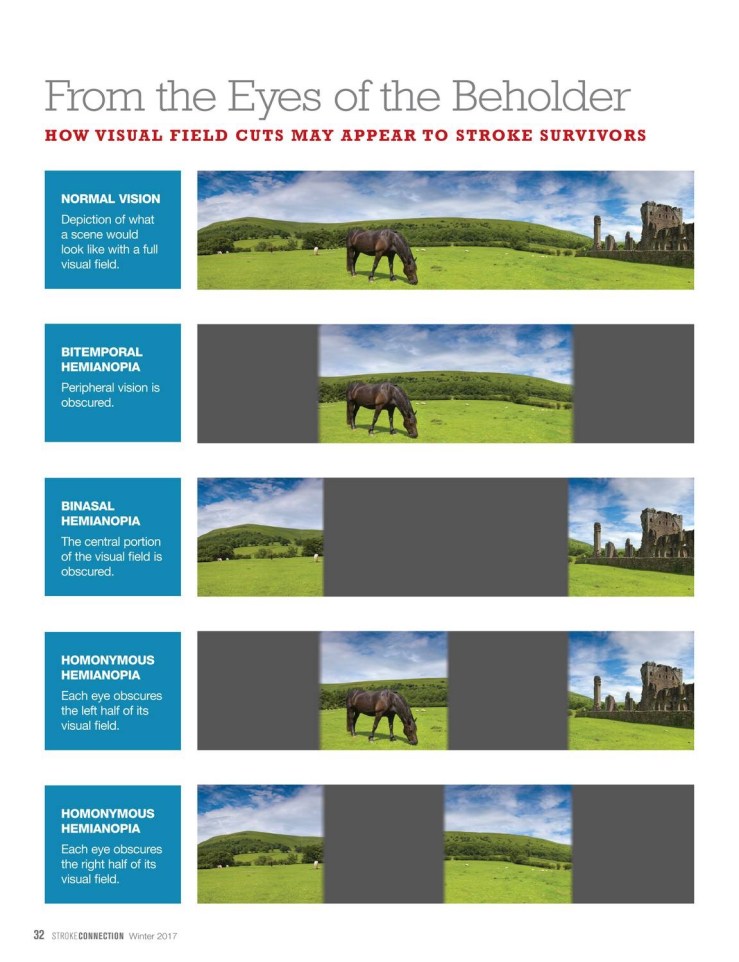
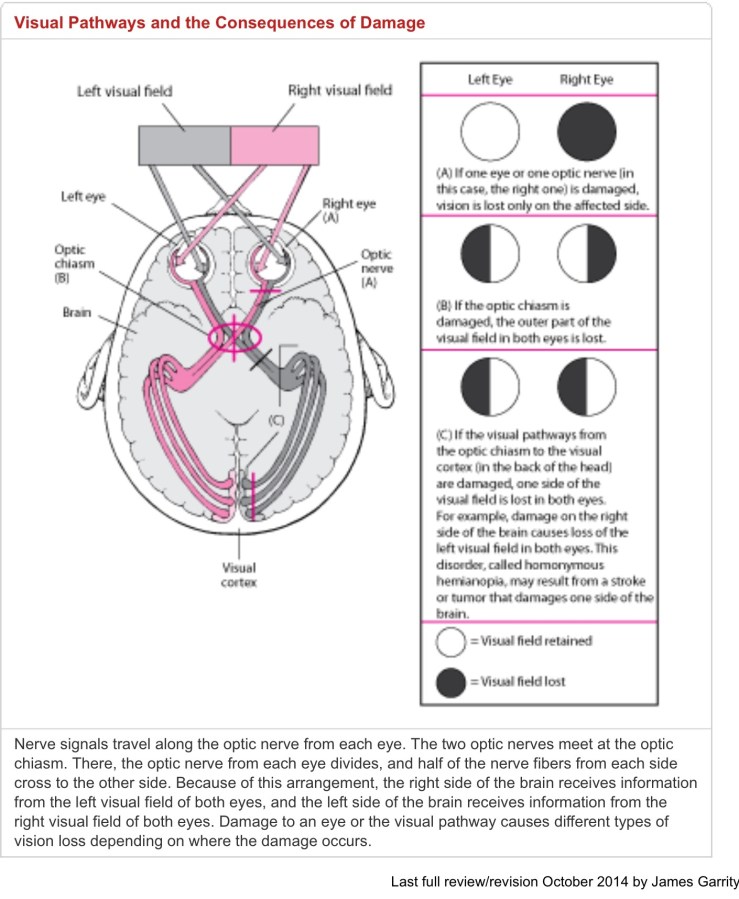
Excerpt from my Caring Bridge journal 10-10-14 (7 days after stroke) “A former student told us that after her stroke in high school she initially thought she was talking just fine and everyone else was just not getting it! After a while she realized it was her speech that had changed…Let me say very candidly that sight issues are extremely hard for Dale and for all of us in the family. Dale’s eyesight is highly abnormal – homonymous hemianopsia (see Vision Deficits)- loss of half the visual field of view in the same side of both eyes- in his case, the right side. He is very physically strong but eyesight affects coordination, actually it affects everything. Can’t see TV or read, depth perception is terrible as he goes to eat or walk or move, grabs at shadows on floor. We don’t know if his glasses help him at all.”

Any changes need to be communicated to all who give care or visit. The need for a Health Advocate is a serious one. I believe every person who is hospitalized needs a Health Advocate to help keep up with needs and services – another topic for another post! Under “Resources/PDFs” in the sidebar to the right, there is a link for Assessment Questions that you can download for yourself and others.

Vision Deficit Examples